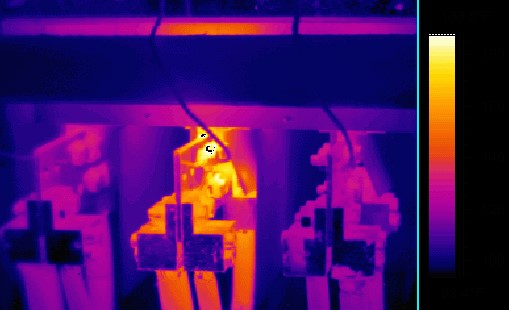
Thermal imaging is a non-destructive maintenance technology that uses infrared cameras to measure the amount of thermal radiation emitted by objects and converted to temperature. Thermal imaging is typically colorized so that objects that emit more thermal radiation than others will have brighter colors. Cooler objects may appear in purple, blue, or green colors. Although thermal image scans Brisbane detect only surface temperatures, these infrared signatures often display temperatures inside structures.
Thermal Imaging Cameras
The cameras used for thermal image scans Brisbane to perform predictive maintenance and heat loss inspection are quite similar. One slight difference is that some heat loss inspection cameras come with a wide-angle lens that allows a thermographer to view large objects from a close distance. Predictive maintenance cameras do not have such a feature. On the other hand, predictive maintenance cameras are used to measure wider temperature ranges. Heat loss inspection cameras have a narrow temperature range requirement.
Cameras continue to improve in portability and capabilities. They can store numerous images and record audio notes. Other new features have a laser pointer that aligns with a spot on the thermal image. Some cameras now come with touchscreen displays to make data entry easier, in-camera routes that offer the professional with an equipment list to follow, and in-camera troubleshooting according to the types of equipment.
Commercial Roofing Inspections
thermal image scans Brisbane are used by commercial roofing inspectors to detect defects, leaks, moisture, and mold on low-slope and flat roofs. Know that wet areas generate more radiation than dry areas. For proper on-roof inspection, a number of experts are necessary, including an experienced roof consultant or roofer, an experienced thermographer and assistant, and the representative of building owners for security and access.
Weather conditions should be dry with low winds and no rain. The effects of solar heating must be considered causing scans to be performed after sundown, for example. After confirming and detecting a suspected area, the specialist will highlight the area with marking paint. A closer visual inspection usually determines the exact problem, although a destructive test is still essential.
Predictive Maintenance of Electrical Systems
Thermal imaging is also an efficient inspection method for predictive maintenance of electrical systems, such as motors, drives, distribution system junctions, and electrical boxes. The facility and equipment can stay operational throughout the entire process. Thermal image scans can identify whether the problem is a corroded element, a loose connection, or a short or overloaded circuit. Over time, electrical connections become dirty or oxidized, releasing excess heat. This can result in major damage from fire or melting metal. Thermographic surveys in transmission and distribution systems can help prevent the failure and cut production losses.
Thermal image scans are also used to inspect utility power poles, enabling technicians to remain a safe distance from the location. Even though aerial thermography can be used for inspecting high-voltage transmission lines together with a ground verification team, it may not be ideal for inspecting distribution lines due to street lights, trees, and other obstructions.
When assessing electrical equipment, it is vital to remember that a hot spot may not reveal a problem. Sometimes it is only a reflection from another surface. An actual hot spot usually stays in a fixed location. Trained and qualified technicians should measure loads to confirm a problem.
 Commercial Electrician