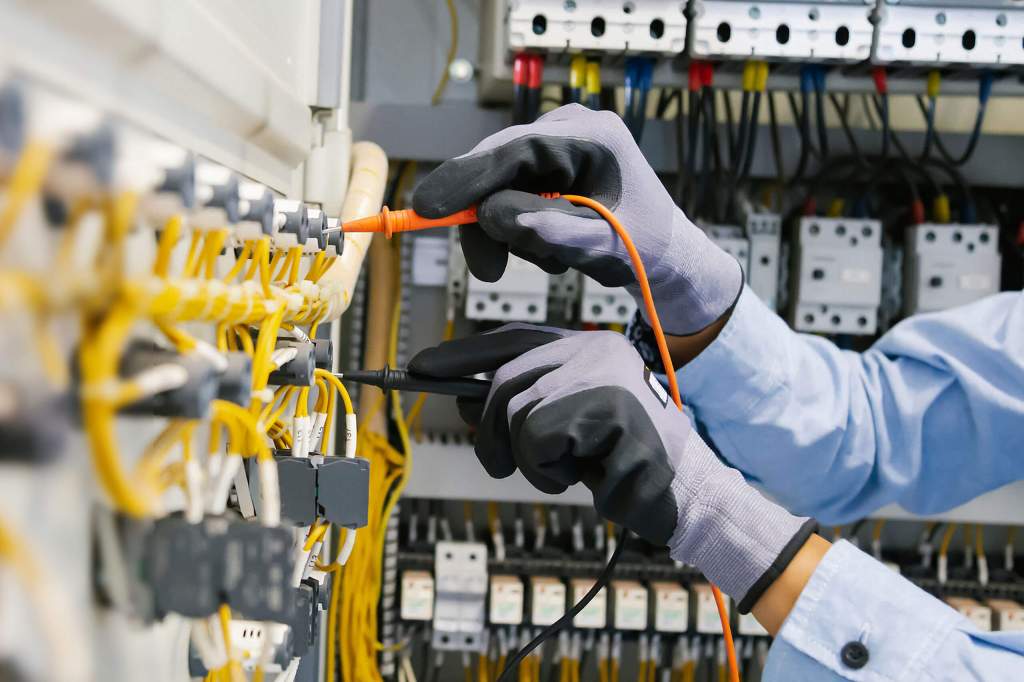
Before working on electrical systems or equipment, electricians follow lockout/tagout procedures to isolate energy sources and prevent accidental startup, reducing the risk of electrocution or other accidents. Electricians interpret technical diagrams and blueprints to understand the layout of electrical systems and troubleshoot issues effectively as personal protective equipment are worn such as gloves, glasses, hard hats and protective clothing. To mitigate the risk of electrical shocks, burns and other injuries the electricians may be tasked with upgrading outdated electrical systems to improve efficiency or meet new safety standards. The electrician starts by gathering information about the reported issue including any symptoms when the problem occurred and any recent changes or maintenance performed on the equipment or electrical system. The industrial electrician repaired or replaced a faulty electrical component such as wiring, switches, circuit breakers, transformers and motors. They conduct a visual inspection of the equipment or electrical system to identify any obvious signs of damage such as frayed wires, burnt components, loose connections or discoloration.
They perform regular maintenance checks on electrical systems to ensure they are operating efficiently and safely as they use testing equipment like multimeters, voltage testers and insulation testers. It has to verify that electrical circuits are de-energised before beginning work ensuring they are safe to handle. The industrial electrician uses various testing equipment such as multimeters, voltage testers, circuit analysers and thermal imaging cameras to measure voltage, current, resistance and temperature at different points within the electrical system. Electricians adhere to wiring standards and regulations to prevent electrical fires, short circuits and other hazards including correctly sizing wires, using appropriate insulation and securely fastening connections. If the issue is not immediately apparent, electricians may systematically isolate circuits or components within the electrical system to pinpoint the location of the fault. Ensuring safety is paramount for industrial electrician and they adhere to specific protocols to maintain a safe working environment wearing appropriate equipment. This involves disconnecting sections of the system and testing each one individually to determine where the problem lies to safety protocols and regulations to prevent accidents and ensure compliance with industry standards.
They ensure that electrical systems are properly grounded and bonded to redirect electrical faults away from personnel and equipment, reducing the risk of electric shock and fire as they perform continuity tests to check for breaks or interruptions in wiring or connections. This involves verifying that electricity can flow continuously through a circuit without any breaks or resistance as the industrial electrician take precautions to prevent arc flash incidents. By wearing arc-rated clothing, installing arc flash warning labels and implementing safe work practices when working on energised equipment, electricians may conduct voltage drop tests. It has to identify excessive voltage drops across components or connections which can indicate high resistance or poor conductivity and the industrial electricians are responsible for repairing a wide range of electrical components. Within the industrial settings as they diagnose issues with electrical systems, equipment and machinery to identify the root cause of malfunctions. They often work closely with other professionals such as engineers, maintenance technicians and machinery operators to coordinate repairs and upgrades. They follow established safety procedures such as maintaining clear workspaces, avoiding shortcuts and using equipment and tools properly to minimise the risk of accidents.
 Commercial Electrician